
Leading With More Doing (Effectiveness) and More Being (Presence)

“Without saying ‘it is’ or ‘it isn’t,’ do you have the courage to be at peace with this?” — Dongshan (Zen teacher, 807–869)
More Doing and More Being
Zen Of Coaching (An online course for coaches)
Half-day Retreat, August 2nd
A Favorite Quote, Michael Pollan
What I’m Watching
In a leadership workshop I was guiding several years ago, a participant raised his hand and said: “Oh, I get the gist of what you’re teaching — leadership comes down to being more aware of what the universe is asking of you.”
Without thinking, really, I responded: “There is some truth to that. And at the same time — write and execute the business plan!”
The room laughed. But the tension I was pointing at is real, and it sits at the heart of what I think the most effective leaders are quietly wrestling with: How do I stay open, present, and attuned — and still serve customers, hit the numbers, have the hard conversations, make the calls?
The answer, I’ve come to believe, is not to choose between being and doing. It is to stop treating them as opposites.
The False Choice
We tend to sort leadership qualities into two piles. On one side: vision, strategy, decisiveness, execution, results. On the other: presence, listening, self-awareness, emotional attunement, and reflection. We call the first pile “doing” or effectiveness and the second pile “being” or presence— and then we quietly assume that more of one means less of the other.
What if this is the wrong frame. It can lead to a particular kind of leader who is either relentlessly effective but oddly hollow, or deeply self-aware but frustratingly difficult to move from insight to action.
Dongshan’s question cuts through this. He isn’t asking you to resolve the tension between doing and being. He is asking whether you have the courage to remain present with the tension itself — without collapsing it prematurely into a comfortable answer.
That, it turns out, is exactly what the most effective kind of leadership requires.
What Integrated Leadership Actually Looks Like
The most effective leaders I have worked with — inside Google, in executive coaching, in Zen practice — share a quality that is hard to name but easy to recognize. They are fully in the room. They act with clarity and speed when clarity and speed are called for. And they know how to wait, listen, and let something emerge when that is what the moment requires.
They don’t toggle between being and doing. They have learned to do both at once.
In practice this looks like: entering a high-stakes negotiation with genuine curiosity rather than a fixed position — and still knowing exactly what you need to walk away with. Giving direct feedback that is honest and uncomfortable — and doing it in a way that leaves the other person feeling genuinely seen. Making a fast decision under pressure — and remaining open to being wrong.
None of this is soft (or easy) It requires more of a leader, not less.
Practice:
Before your next significant leadership moment — a meeting, a decision, a difficult conversation — try this:
Ask yourself these questions:
What does this moment ask from me? What does fully doing and fully being present look like and feel like?
Dongshan’s question — do you have the courage to be at peace with this? — is worth sitting with beyond the newsletter. The “this” he points at is the irreducible complexity of any real moment: the fact that things are neither simply good nor bad, neither fully known nor fully unknown, neither entirely in your control nor entirely out of it. Leadership, at its best, is the practice of acting wisely inside that complexity — without pretending it isn’t there.
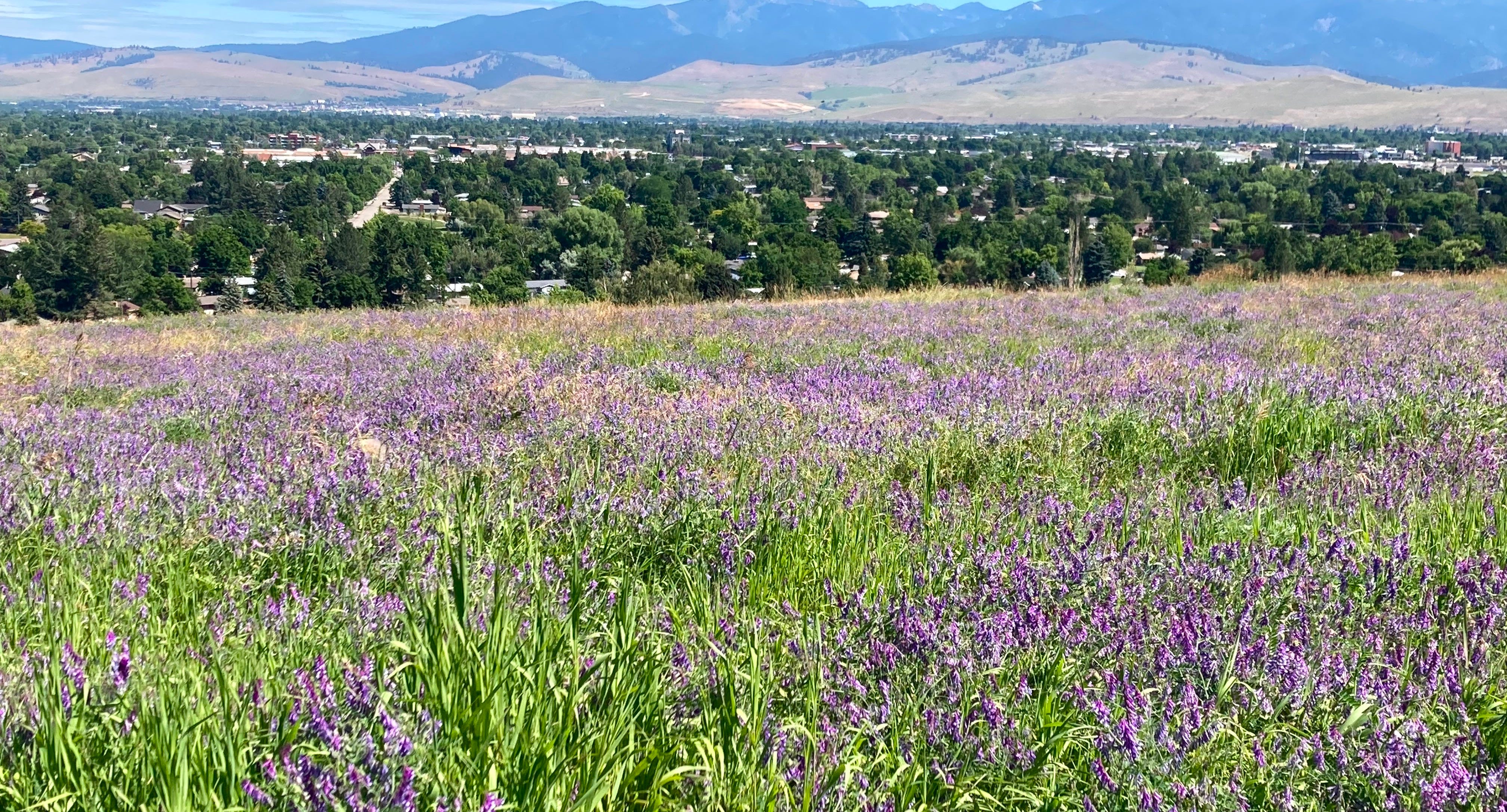
(Missoula, Montana)
Zen Of Coaching. An Online Course, beginning October 23rd
Zen of Coaching is a transformational program for executive coaches and leaders who want to deepen their presence, expand their impact, and build a coaching practice rooted in wisdom, not just performance. Blending Zen principles, mindfulness, and real-world leadership experience, this course—created by Marc Lesser, the Zen teacher and CEO who helped bring mindful leadership to Google—supports you in cultivating stillness, navigating complexity, and coaching with greater authenticity, clarity, and purpose.
Half-day Retreat, In-person (Mill Valley) and Online, Sunday August 2nd, 9:00 a.m. - 12:30 p.m.
In our world of busyness, of more/faster/better, this half-day retreat offers time to stop, reflect, and renew. Together we’ll follow a gentle schedule of sitting and walking meditation, a talk, and some discussion. Anyone looking to begin or deepen a meditation and mindfulness practice is invited to attend.
A Favorite Quote
Plants can predict changes in their environment and take appropriate steps: given a choice of soils in which to invest root growth, pea plants will pick one in which nutrient levels are increasing rather than offering more immediate nutrients, suggesting that they can predict future conditions and prepare for them. Plants can send and receive signals from other plants and alter their behavior in response to these signals. They can distinguish kin from competitors and both from their own selves.
- A World Appears, by Michael Pollan
What I’m Watching
Anne With an E - A series that reimagines Anne of Green Gables. The program doesn’t shy away from Anne’s traumatic past while celebrating her extraordinary resilience, intelligence, and refusal to be diminished by the world’s smallness. Beautifully shot, warmly acted, and genuinely moving.
Warmest regards,
Marc